

Farming Can Be Fun Ecosystem
Project Details
Duration: March 10 - May 10, 2020
School: University of Wisconsin-Madison
Course: Design Thinking for Transformation
Challenge: Design a solution to sustainable farming (the project was done virtually due to COVID-19)
Process
Research
Inspiration/Empathy
Ideation
Prototype
Usability Test, Iteration
Tools
Survey Monkey
Miro
Google Slides
Figma
The Future is Teaching the Next Generation about Sustainable Farming.
Background
This design project was in collaboration with Frank Lloyd Wright's Taliesin in Wisconsin. The program upheld the ideas of Mr. Wright to achieve sustainable farming. "Wisconsin, which has long touted itself as America’s Dairyland, has lost 551 dairy farms in 2019 after losing 638 in 2018 and 465 in 2017, according to data from the state Department of Agriculture, Trade and Consumer Protection."
The goal of this project is to create a problem-solving, feasible, and viable solution to sustainable farming in rural areas. Meanwhile, people, regardless of their social-economic status, can access the farm goods without waste.
Research Takeaways
Based on an interview with the Director of the Food Artisan Immersion Program at Frank Lloyd Wright's Taliesin, we identified the pain points, needs, and opportunities of a typical nowadays farm. Our group brainstormed with possible ideas and narrowed down to one area and conduct in-depth research to obtain more insights for inspiration.


Our group took several human-centered approaches (include survey, interviews, field trips) to summarize the following insights,
-
Education is a vital perspective for people to understand food better e.g. the ‘perfect’ produce they see in grocery stores is not realistic in the real world.
-
Create the right environment at a younger age to root the concepts of sustainable farming or eating seasonally
-
Experience of gardening in younger age leads to a higher interest in growing their own food and a healthier lifestyle in adulthood
-
Cooking changes the perspectives toward food and eating healthy
How might we (HMW) problem statement
How might we create a variety of experiences using existing resources to encourage urban youth to practice sustainable agriculture they would carry into adulthood?
Design Process
Opportunity Areas
With our HMW problem statement, we highlighted to use existing resources, so we explored the following areas to work on.
Area 1: “Farming Can Be Fun” Cartoon
Farming can be fun! Arouse the interests of kids on farming. Using interesting videos to have kids actively engage with concepts such as sustainable farming or organic food. Using Social Media as a medium to share more content.
Area 2: Growing Power MKE Revitalization
Growing Power MKE is an urban agricultural organization that stopped business. We can rehab hoop houses and existing infrastructure to create a play-land where Kids can go to an inner-city-farm after school to learn about sustainable agriculture and eating, as well as experience hands-on farming.
Area 3: K-12 School Programs
Courses are offered in K-12 Schools where students have the opportunity to learn about the nutritional values of food, master ways to grow fresh produce and explore ways to cook what they grew in the farm within their meals.

YouTube Channel
Social Media Content
Play video in class

Greenhouse Touring
Farming Experience
Farmers Market

Nutrition Class, learning in garden & cooking class
Concepts Vizualization
We upheld the value propositions of for our prototyping process
-
Inner-city Farm Playland that provides hands-on farming experience for kids at all age.
-
Enhancing community through sustainable farming.
-
Close collaboration with K-12 schools on learning sustainable farming.

Cartoon storyboard

MKE Power Playland

Education Programs
Solution
After testing the water with the interviewers of our prototypes, we iterated some ideas inspired by their feedback and decided to go bigger. We wanted to make a greater impact, solve our HMW problem from a broader scope. Hence, we decided to combine all three opportunities and our ideations to create a whole experience ecosystem for youngsters. It is called "Farming Can Be Fun" Ecosystem, targeting K-12 kids.

Furthermore, we want our ecosystem to bring our society in the long-term. Hence, we planned out why would investors put money into this plan. The ecosystem could greatly benefit the rural area and further, achieve a self-sufficient sustainable farming practice within the area.

Business Model
Go-To-Market
-
City subsidies through Urban Improvement grants
-
Building Partnerships with Schools
-
Social Media Marketing & Outreach
-
Creating “Farming Can Be Fun” cartoon series as promoting content and assisting resources
3 Year Projection
-
Adopting the education programs to 90% of public schools across Milwaukee, Wisconsin
-
Replicate the inner-city playland model to other cities
-
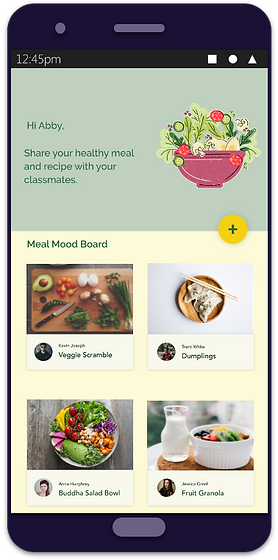
Launch by-products of “Farming Can Be Fun”: Mobile application
Challenge Takeaways
Due to the time limitation on this project, as well as with the pandemic, our team wasn't able to conduct more in-depth research and second-round prototype testing with users. However, with a close collaboration online, the project enabled me to discover and learn more tools to conduct UX-related projects virtually.
Furthermore, the challenge required us to take viability into account. We are not simply finding a solution to address a problem or to create a better experience, but also thinking from a business perspective about how to sell our solution.